
Regenerative Wine Tasting
The MINDSET Symposium closes the way it should: with a glass in hand, sampling wines from leading regenerative producers.
We've spent three days exploring the opportunity of regenerative agriculture. Now we taste what it delivers. The case for regenerative agriculture isn't just made in the vineyard; it's made in the glass. Wines from 14 producers will be poured — vintners working across distinct regions, climates, and varieties, but united by a commitment to farming that builds soil health and biodiversity, enhances farm resilience, stores carbon, and produces wines of genuine place.
Several are contributors to Wine, Water & Weeds, the forthcoming edited collection we'll be formally announcing at the Symposium. You'll get to meet a few of the writers behind the chapters and taste the wines that informed their thinking.
This is a closing celebration, and more. It's a chance to talk directly with growers and winemakers who are doing the work, to compare approaches across appellations, and to experience firsthand how the regenerative mindset is reshaping fine wine.
Come thirsty. Celebrate what's next.
JUNE 10 | 4:30-6:00 pm
If you are a wine lover you can join us for this tasting for just $49/pp.
Register for the tasting: https://www.agmindset.com/register
We are proud to lovingly tend some of the oldest vines planted and still in production in Santa Barbara County. We are committed to beyond organic farming, embracing the native ecology, integrating animals, and walking our vineyard rows daily. We believe that unmanipulated wines with energy and a sense of place only come with a deep connection to the land.
Pronunciation: "ahm-veev"
Translation: soulful, lively soul, living soul


We are a team of two winemakers, wife and wife, whose paths first crossed in 2006 through our work in the wine industry. Our friendship grew through wine and travels, which also sparked our love. Our journey of friendship, love, and wine now continues together with our dream winery, Camins 2 Dreams.
Soil is a mixture of minerals, organic matter, gases, liquids, and countless organisms that together support life on earth. The beauty is in the story it tells. Our tiny operation is aimed at producing high quality and balanced wines.
As a small winery we can put more time, attention, and care into our wines. So in order to make wines of the highest quality, we: 1. Select vineyards that are farmed with the greatest level of care. 2. Focus on single varietal and single vineyard. Single vineyard allows us to focus on "the place" the grapes are farmed and single varietal will show how each varietal is affected by that place (i.e. soil and microclimate).


As one of the first wineries in the Santa Maria Valley, we’ve got some serious cred behind us. In fact, the part of our estate that was originally called the Tepusquet Vineyard was one of the first vineyards planted in the region, back in 1971.
In 1986, our founders Barbara Banke and Jess Jackson bought that vineyard and established Cambria. After 40 years of cultivating grapes and people, there’s a lotta love and pride here at our estate. Here are some examples of our sustainable and regenerative leadership:
Reduced Carbon Emissions — By 2050, we aim to reduce emissions and sequester more carbon than we generate. We're making big changes through our Carbon Farming model; by using compost and cover crops, and little to no tilling of the soil, we're already seeing big progress.
Reduce Waste — We're proud to say that for the past several years, we've only sent about 1% of waste to the landfill. The rest is either recycled, reused, or turned into compost. We're well on our way to reaching our goal of becoming a Zero Waste winery.
Renewable Energy — Our winery is stylishly outfitted with 1,836 solar panels, which now power 54% of our operations.
Employee Garden — Every year we plant a vegetable garden for our team members. Together we cultivate all the produce and use it for our BBQs and parties. Our team can also bring some of the bounty home to their families.
Team Member Retention — Sing it out loud: R-E-S-P-E-C-T. We value each other and we're proud to say our vineyard and winery family members have been with us for an average of 18 years.
In an industry first, Robert Hall Winery has initiated a living case study for the wider wine community to learn about regenerative organic viticulture, comparing the results with our sustainably-farmed vineyards. The trial is led by Kirk Brown, Director of Grower Relations for O’Neill Vintners and Distillers.
The purpose of the study is to understand regenerative organic farming practices and their effect on the vineyards’ ability to sequester carbon and overall quality effects on soil, fruit and wine.
Robert Hall is pleased to introduce the first Regenerative Organic Certified® wines commercially available in national retail distribution, a groundbreaking step for the future of wine.
Earning this certification is a rigorous, multi‑year process that only a small number of wineries worldwide have achieved. This new collection of Regenerative Organic Certified wines is your introduction to that work, where the character of Paso Robles is expressed through wines crafted with rare precision and a deeper responsibility to the land.

The Robert Hall ROC® 2024 Cabernet Sauvignon and 2025 Sauvignon Blanc, crafted by Winemaker Amanda Gorter, are available at Whole Foods Market locations nationally.
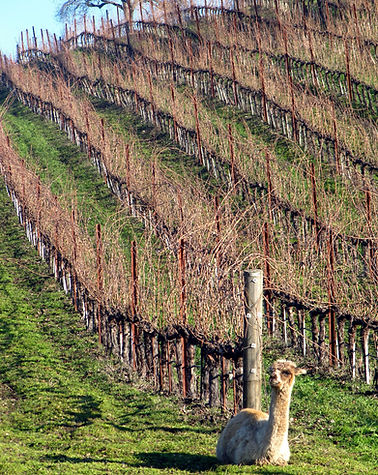
We are proud to be the first Regenerative Organic Certified® vineyard in the world. Tablas Creek's 135 acres of estate vineyard is largely dry-farmed, limiting yields and emphasizing character of place. In addition, we have been organic since our inception, certified in 2003, and Biodynamic since 2010, certified in 2017. Our practices - including a mobile herd of sheep, alpacas and guard donkeys - control weeds, fertilize, and build healthy soils, capturing carbon and retaining the winter moisture.
Our winemaking, including native yeast, small-lot fermentation and the use of large, neutral French oak barrels, preserves our wines' connection to the land and vintage which produced them.
We’re dedicated to ensuring this land remains fruitful for generations. To yield a delicious crop of organic grapes year after year, we follow strict organic farming practices across our estate in Paso Robles. We avoid harmful pesticides and fertilizers, focusing on renewable resources while conserving soil and water. That’s why we’re proud to be both CCOF Organic and Regenerative Organic Certified®.
In 2026, Halter Ranch became the first Paso Robles winery to achieve Glyphosate Residue Free Certification by The Detox Project.
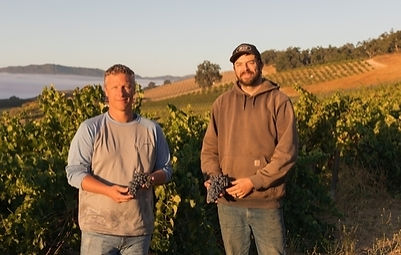

Phelan Farm encompasses the lessons of a life in wine and the vision of a vineyard intertwined with nature. Here at the extreme edge of a continent, the cooling grasp of the Pacific shapes our philosophy and sharpens our intent. We seek a future where wine is a gift to the earth, as well as to humankind. We strive humbly to inspire, as we have been inspired. Please join us.
“As farmers, we have an opportunity to heal the planet and to turn back the clock on climate change.” - Hilary Graves.
We are proud to share that our 85-acre estate was officially designated as Regenerative Organic Certified® (ROC™) starting in the fall of 2023, following certification from California Certified Organic Farmers (CCOF) in 2021. These milestones are the culmination of our sustainable farming journey that began nearly 20 years ago.
"Regenerative viticulture draws inspiration from nature,” says Farmer-Winemaker Eric Jensen, who founded Booker Vineyard in 2001. “It takes organic farming a step further to create a discernible improvement to the ecological and social function of the farm and community. This is something we’ve always strived for at Booker.”


We farm the way that we farm, not to lead, but to follow the path that nature puts out before us. When you farm in line with nature, you see results that you just can’t replicate with conventional farming. You are given fruit of incredible depth and integrity, leading to wines that are a tangible record of a place in time.
We chose to certify our vineyards, not to follow a trend, but because we believed in the results and wanted to be held accountable for those who share the wines.
Once you can settle into that rhythm of the land, you can find your place in that constant dance between the sky and soil that creates the life that we revolve around. Our wines are expressive of the place they were grown, and a symbol of our commitment to leaving this planet a bit better than we found it.
Our five estate vineyards have been certified organic since 2006, and in 2022, we became Regenerative Organic Certified®. Regenerative organic farming relies on the principle that a farm is a living, breathing ecosystem, and that every player is important. We incorporate biodiversity by encouraging healthy microbial growth, the presence of beneficial plants, birds, insects, and other animals, and allowing natural processes to thrive, creating the strongest ecosystem possible.
We are committed to making wines of the highest quality and consistency. The best wines can only come from the best grapes, which is why we are 100% estate grown. This allows us to prioritize the long-term health and longevity of the vines and create a balanced ecosystem in our vineyard, ultimately producing wines with an unmatched expression of terroir.


Human. Nature. Hope Well.
Hope Well wine is the alchemy between the natural world, my deep love for this ground and the unsung heroes whose strong hands, hearts and minds have helped me make it.
The landscape knows everything I want to learn in this life.
Wine, for me, offers a different dimension of communication with my teacher and mentor, this place. The wordless communication of so many days and lessons culminates at harvest, and you are allowed communion and conversation.
Founded in 1984 as a classic multi-crop farm, Salcheto is now a vineyard of over 60 hectares of organically farmed grapes, operating in one of the most ecologically advanced wine cellars to make sustainable local wines with honed mouthfeel and aroma.
At Salcheto we believe that a business must set itself goals of on-going environmental and social, as well as economic, improvement from the very onset. The on-going pursuit for improved interaction with the environment has led us to:
-
Work in an energetically independent wine cellar (“off-grid”)
-
Conduct and certify our vines and our wines according to the European Organic Protocol
-
Produce our own fertilisers (from composting) and dynamizing the soil with Horn Manure ‘500’
-
Use wood materials exclusively from controlled sources and responsibly managed forests (FSC and PEFC)
-
Purify and recycle 100% of our waste water
-
First company in the world to have certified the Carbon Footprint of a Bottle of Wine


Maison Mirabeau is proud to be at the forefront of the regenerative farming movement in Provence. Mirabeau Co-founder and CEO Stephen Cronk, who also co-founded the Regenerative Viticulture Foundation, is on a mission to help transform the Côtes de Provence into France’s leading region for regenerative agriculture. Domaine Mirabeau holds the distinction of being the first vineyard in both Provence and France to achieve Regenerative Organic Certified® status. In addition, Mirabeau is actively converting its network of growers to regenerative practices, rolling out AGW Certified Regenerative accreditation across its organic producers.
This commitment is reflected in One Day by Mirabeau, a cuvée made from regeneratively farmed grapes and packaged with environmental responsibility in mind.
By 2028, the ambition is for all of Mirabeau’s Côtes de Provence wines to come from regeneratively farmed vineyards, setting a new benchmark for sustainable winemaking in the region.