
Thought Leaders
Anna Brittain, MINDSET Creator | Strategist
Brock Dolman, Occidental Arts & Ecology Center
Zach Heyman, Farmhand Foundation
Darcey Howard, Regenerative Organic Alliance
Matthew Johnson, Cal Poly Humboldt
Obi Kaufmann, Naturalist, Author, Illustrator
Tim LaSalle, Center for Regenerative Agriculture & Resilient Systems
Co-Owner, Âmevive
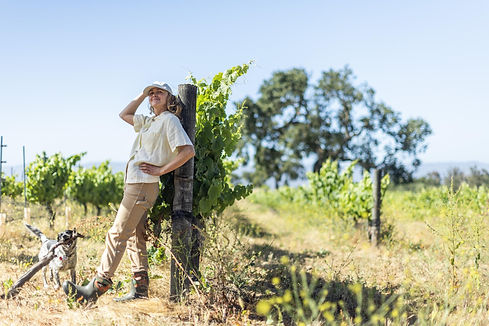
Alice Anderson
Alice Anderson grew up in California and has spent her career championing regenerative farming and the deep relationship between people, vines, and the ecosystems that hold them. She is passionate about true sustainability, animal integration, and balancing intuition with science.
After earning her degree in enology and viticulture from Cal Poly, her path led her through biodynamic vineyards in New Zealand, the Northern Rhône, and back to California, all experiences that have shaped her belief that great wine begins with thoughtful stewardship.
Alice and her partner, Topher De Felice, now lease and farm 21 acres of estate vineyards for their wine brand, Âmevive, including 10 acres of the historic, own-rooted Ibarra-Young Vineyard.
Âmevive began in 2019 with just six barrels and has since grown to have global representation. The wines are made classically and without intervention. The wines are energetic, elegant, and intended to be pure expressions of the land from which they come. Inspired by the Old World but rooted in California, Alice’s wines carry both intention and playfulness.
Outside the vineyard, Alice is passionate about growing food and sharing it with anyone who shows up. She loves her animals, loves being outside, loves her work, and loves connecting people to the land she tends.

Keith Berns
Innovator in Cover Crops & Soil Health |
Co-Owner, Green Cover
With over 30 years of no-till farming and a decade of teaching agriculture and technology, Keith Berns brings a wealth of knowledge to the field. He co-owns and operates Green Cover Seed, one of the nation’s leading cover crop seed providers and educators, where he’s experimented with over 120 cover crop varieties in diverse conditions. Keith also developed the widely used SmartMix Calculator™, helping farmers optimize cover crop mixes for their operations.
Farming 1,800 acres of irrigated and dryland crops in South Central Nebraska, Keith has gained deep insights into nitrogen fixation, moisture management, and grazing systems. His work earned him recognition as a 2016 White House Champion of Change for Sustainable and Climate-Smart Agriculture.
A sought-after speaker, Keith shares his expertise on cover crops and soil health over 80 times a year. He also served as chairman of the Nebraska Healthy Soils Task Force, appointed by Governor Pete Ricketts. Keith holds a Master’s in Agricultural Education from the University of Nebraska and remains committed to advancing regenerative farming practices and systems.
Beyond his professional endeavors, Keith enjoys family time with his wife, Audrey, their seven children, and twelve grandchildren!

Anna Brittain
Regeneration & Climate Action Strategist
Anna brings over 20 years of systems-level thinking to environmental challenges—bridging science, economics, and practice to advance sustainability, nature-based solutions, and regenerative agriculture.
Anna has worked nationally and internationally on climate solutions and policy with organizations including Resources for the Future and the Institute for Governance & Sustainable Development. Her 15 years of wine industry experience have focused on translating whole-systems approaches into rigorous, performance-based certification standards and actionable frameworks (including the Six Pillars of Sustainable Winegrowing Leadership), while directly supporting growers and vintners through dozens of community-building events and on-the-ground implementation.
Anna guided Napa Green's evolution over 10 years, serving as lead consultant (2015-2019) before stepping into the Executive Director role (2019-2025). During her tenure, she catalyzed regional climate leadership through the RISE Climate & Wine Symposiums, convening 700+ participants and 65+ expert speakers to galvanize the industry to take action. Under her leadership, Napa Green became the first vineyard certification program to focus on regenerative farming, climate action, and caring for people; the first to phase out Roundup; and among the first to partner with the Regenerative Viticulture Foundation to launch the One Block Challenge.
Anna was recognized as a Wine Enthusiast Future 40 Tastemaker and Wine Business Monthly Wine Industry Leader (2023) and among The Imbibe 75 (2024). She holds a master's degree in Environmental Science & Management from UC Santa Barbara's Bren School, with specialties in Economics & Policy and Water Resource Management.

Mimi Casteel
Owner & Winemaker, Hope Well Wine
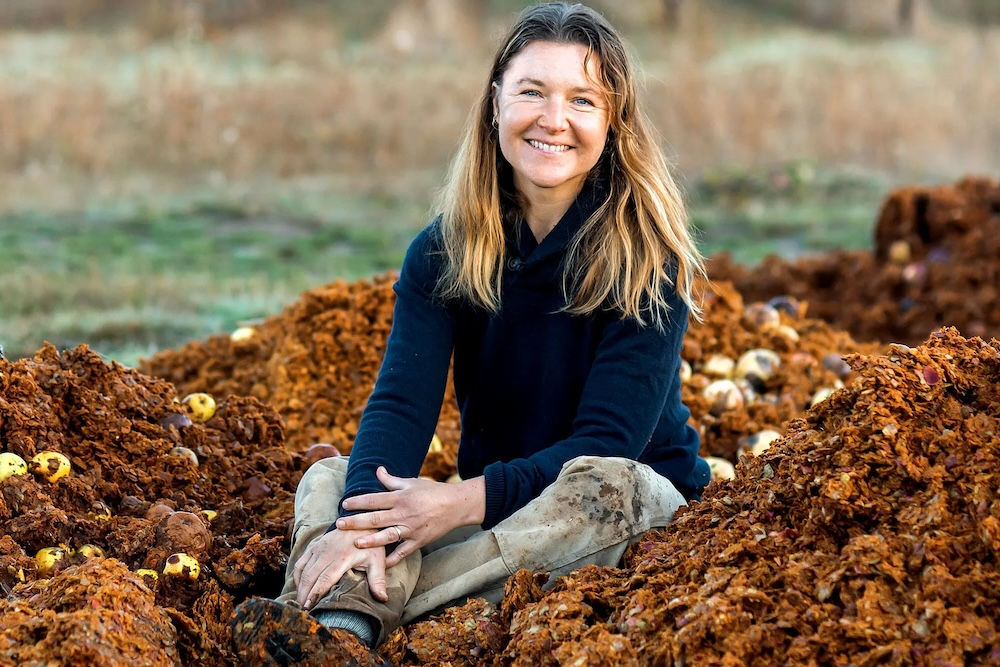
Mimi grew up on her family’s vineyard, Bethel Heights. Growing up working in the vineyard and winery, Mimi gained such an appreciation for the industry that she promptly left home after high school. Armed with a BA in History and Classics from Tulane University, Mimi spent the next year working in various National Forests across the west. Her adventures fueled her passion for studying botany, forestry, and ecology. Mimi earned her MS from Oregon State University in Forest Science, and spent the next several years working as a botanist and ecologist for the Forest Service, living in the backcountry. Her work in the forests led her to realize that the greatest threats to the future of the planet and all species had to be addressed at its root – in the agricultural and working land base.
Mimi returned to Bethel Heights in 2005, where she implemented new farming systems and began a journey of experimentation and discovery. In 2016 Mimi left Bethel Heights to grow and make wine at her home vineyard and living laboratory, Hope Well. Hope Well is the living model for a habitat-based regenerative model for agriculture. Mimi’s experiments are all with the goal of producing the most nutrient-dense, healthy food and wine, while recovering the natural systems of nutrient cycling, improving biodiversity and species retention, and maximizing the function and output of a diverse ecosystem.

Brock Dolman
Water, Permaculture & Wildlands Program Director
Occidental Arts & Ecology Center
Brock Dolman is a wildlife biologist and is internationally recognized as a restoration ecologist and renowned innovator in watershed management and Permaculture design. In 1994 Brock co-founded the Sowing Circle, LLC Intentional Community & Occidental Arts and Ecology Center (OAEC) where he continues to act as co-director of OAEC’s Permaculture/Resilient Community Design Program, Wildlands Program and WATER Institute.
He has taught Permaculture courses and consulted on regenerative project design and implementation in 20 countries and widely in the U.S. He began promoting the idea of Bringing Back Beaver in California in the late 1990’s, which led to him being given Salmonid Restoration Federation's Golden Pipe Award in 2012. His latest effort, based on over 35 years of direct experience, is OAEC’s Fuels to Flows Campaign.
Brock graduated in 1992 with honors from the University of California Santa Cruz in Agro-Ecology and Conservation Biology.
Zach Heyman
Director of Thriving Ecosystems,
Farmhand Foundation
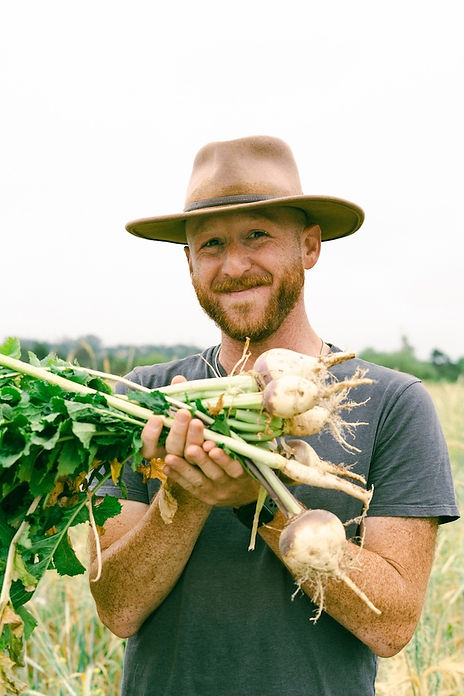
Zach Heyman is Thriving Ecosystems Director at Farmhand Foundation. He is committed to advancing soil health, biodiversity, and resilient regional food systems across all facets of his work. Over the past decade, he has worked across diverse farming landscapes in New York's Hudson Valley and California's Central Coast, stewarding integrated livestock systems, diversified orchards, compost and fertility programs, and ecological monitoring initiatives rooted in whole-farm design.
In addition to his years of regenerative farming experience, he has also worked as a technical assistance provider supporting growers through climate-smart agriculture and soil carbon programs across the Western U.S. His work increasingly focuses on habitat restoration and integration within working lands, designing context-appropriate planting systems such as hedgerows, pollinator habitat, and native plant communities that support beneficial insects, strengthen biological pest management, and expand on-farm wildlife habitat.
At Farmhand Foundation's Moon + Oaks Farm in Ojai, Zach leads the collaborative stewardship of a 10-acre landscape transitioning from fallow ground to regenerative production through habitat restoration and integration, compost production, diverse cover cropping, and adaptive monitoring. In addition to his on-farm work, he leads the Farmhand Foundation’s efforts to strengthen whole-farm ecosystem health across the region. He provides technical assistance, soil health planning, on-farm habitat installations and monitoring, and organic transition support for partner growers.

Head Pilot & Operations Manager, Parabug
Kevin Hill
Originally a cinematographer in the film industry, Kevin is a Bay Area native whose passion for aviation began long before joining Parabug. In 2012, he began building and flying custom heavy-lift unmanned aircraft, including large-scale helicopter platforms designed to carry professional cinema camera systems. Working at the forefront of aerial cinematography, he developed extensive experience in aircraft design, flight operations, and mission planning while operating complex aircraft in demanding environments.
Kevin joined Parabug in 2017 and has been a key contributor to the company’s growth and development ever since. Drawing on his extensive experience designing, building, and operating unmanned aircraft systems, he helped develop operational procedures, train pilots, and support the advancement of Parabug’s biological control delivery technology. Having personally flown tens of thousands of agricultural acres, Kevin brings nearly a decade of hands-on agricultural aviation experience to the industry. Today, he oversees flight operations, trains new service providers, and supports Parabug deployments throughout North America, Australia, and other emerging markets. His combination of technical expertise, field experience, and commitment to innovation has helped shape the Parabug technology and service network operating today.

Darcey Howard
Director of Marketing & Engagement
Regenerative Organic Alliance
Darcey has spent her career championing ideas and brands that challenge the status quo and make the world better. As ROA’s Director of Marketing and Engagement, she leads campaigns that inspire consumers, support our partners, and shine a spotlight on Regenerative Organic Certified® products.
With more than 20 years in brand strategy and marketing leadership, Darcey has helped mission-driven companies like Earth Lab Holdings, Coconut Bliss, Loomstate and Thinking Tree Spirits grow, rebrand, grow, and share their stories with the world. She loves blending creative storytelling with smart strategy to bring the regenerative organic movement to life.
When she’s not championing regenerative agriculture, Darcey is an active board member on the Lane Arts Council, advocating for the arts. Also, on the SAVE the BEE organization board supporting pollinator health, local food systems, and sustainability in her hometown of Eugene, Oregon where she lives with her husband and multiple wind and human-powered water faring vessels.

Matthew Johnson
Professor, Wildlife Habitat Ecology,
Cal Poly Humboldt
Matt Johnson is a professor of Wildlife Habitat Ecology at Cal Poly Humboldt, where he has taught since 1999. He earned a BS in Wildlife at UC Davis and a PhD in Ecology at Tulane University.
His interests are in wildlife habitat ecology, with a particular focus on wildlife in agricultural areas and other working landscapes. His goal as an educator is to help students not only learn the skills necessary to become accomplished biologists, but also to foster an appreciation for how good land management practices can benefit both people and nature. As a researcher, his goal is to answer ecological questions that offer practical information for farmers to simultaneously advance their own goals while also helping wildlife.
For the past several years, he has worked with some of his students to study the benefits of owls and songbirds for pest management in vineyards. Farmers Collaborate with Songbirds and Owls to Remove Pests from Winegrape Vineyards

Obi Kaufmann
Naturalist, Author, Illustrator
In his artful yet analytical books, Obi Kaufmann explores the transformation of California’s resource landscape from its ancient origins through its modern challenges to its future possibilities. In his lively presentations which feature paintings, hand-drawn maps, and other data, Obi presents the story of how we learn from the deep past to uncover the truth about all possible futures. Through the parsing of what he calls Ecological Philosophy, Obi employs literature and poetry, the history of the physical sciences, and indigenous-traditional ecological knowledge to present the rhetorical and epistemological theories of Consilience (the marriage of science and art), Aesthetics (the transmission of meaning through media), and Complexity (the functional description of emergent phenomena). Heightened with lyrical prose and backed by up-to-the-minute, well-sourced science, the result is a continuance, in effect, of the award-winning, best-selling story he explores in his California Field Atlas series. Through this paradigm, the natural world holds more intrinsic than it does utilitarian value, the rights enjoyed by society are ethically balanced by the responsibilities of mutualistic stewardship, and emergent philosophies of respect for nature’s living systems describe a future for the Golden State that is as resilient as it is biodiverse. By addressing the profound changes our unique landscape has undergone and continues to go through, Obi explores what it might mean for the future of humanity in this most beautiful and perilous of all places, our lovely California.
An avid conservationist, Obi Kaufmann regularly travels around the state, presenting his work and vision. Recent books:
-
The State of Fire; Where, how and why California burns (2024)
-
The Deserts of California, A California Field Atlas; Vol 03 — California Lands Trilogy (2023)
-
The Coasts of California, A California Field Atlas; Vol 02 — California Lands Trilogy (2022)
-
The Forests of California, a California Field Atlas; Vol 01 — California Lands Trilogy (2020)
-
The State of Water; Understanding California’s most precious resource (2019)

Founder | Chief Vision Officer
Advancing Eco Agriculture
John Kempf
John Kempf is an entrepreneur, speaker, podcast host, leading crop health consultant, and designer of innovative soil and plant management systems. He founded Advancing Eco Agriculture in 2006 and serves as Chief Vision Officer and Executive Board Chairman.
John believes regenerative agriculture management systems can:
-
Regenerate producer profitability and create economic incentives for producers.
-
Produce crops that are inherently resistant to possible infections by insects, bacteria, fungi, nematodes, and viruses, eliminating the need for pesticides.
-
Produce food that can regenerate public health, with an elevated content of immune compounds that transfer plant immunity to livestock and people, providing food as medicine.
-
Rapidly sequester carbon, build soil organic matter much faster than commonly expected, restore hydrological cycles, cool the climate, and reduce the water requirements of a crop.
All of these benefits and more can be achieved simply by managing soils and crops differently in a manner that enhances rather than suppresses biological function.

Dr. Tim LaSalle
Co-Founder, Center for Regenerative Agriculture & Resilient Systems, CSU Chico
Tim LaSalle served as the first CEO of Rodale Institute, and as the Executive Director of the Allan Savory Center for Holistic Management. He was a consultant, advisor, and research coordinator for the Howard Buffett Foundation in Africa on soils and food security for smallholder farmers. He served as the President/CEO of the California Agriculture Leadership Program, where he arranged educational leadership programs in more than 80 countries with heads of state, ministers, and community leaders.
Most recently, he co-founded the Center for Regenerative Agriculture & Resilient Systems at CSU Chico, which "advances regenerative practices through cutting-edge research, transformative education, and collaborative community partnerships."
He is Professor Emeritus of California Polytechnic State University.


Elaina Leibee
Wine Director, Erewhon Market
Elaina Leibee @vineandbine is a specialist in organic and biodynamic wines, a wine educator and a private wine consultant. She has built a career mining the best talents in Los Angeles in food, beverage, art and style to offer incisively curated events that are committed to supporting local charitable organizations. A Wine Spirits Education Trust Diploma Candidate, she currently acts as the Wine Director of @erewhonmarket, Wine Buyer at @canyongourmet in Topanga, CA, and is proprietress of Mago Events & Consulting @magoevents.
Her aesthetic and work ethic are evidenced by a degree in Art History from @uscedu, volunteer work at major public art institutions (Los Angeles Art Association, @lacma, @gettymuseum, @themintmuseum), and positions in top-level management at respected Santa Monica establishments including, @esterswine, Venokado and Library Alehouse.
Jordan Lonborg
Regenerative Consultant & Manager, CVCA
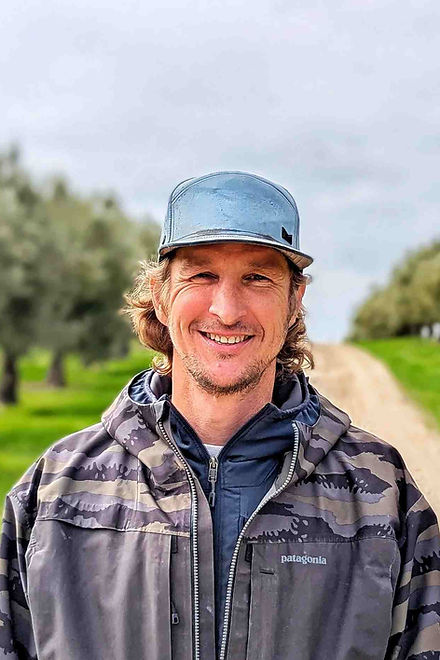
Jordan Lonborg serves as Regenerative Consultant and Manager of Organic, Biodynamic & Regenerative Viticulture for Coastal Vineyard Care Associates (CVCA). In this newly created role he leads the firm’s initiative to scale regenerative viticulture across the California Central Coast, guiding the conversion of vineyards to organic, regenerative, and biodynamic systems, advising on soil-health protocols, cover-crop integration, biodiversity practices and certification pathways.
Jordan began his career at Monterey Pacific Inc. where he assisted in the management of nearly 4,000 vineyard acres, advancing from Viticulture Technician to Pest Control Advisor and Viticulturist.
In 2016 he joined Tablas Creek Vineyard, where he played a key role in piloting the Regenerative Organic Certified® (ROC) program and helped Tablas Creek become the first vineyard globally to earn ROC certification.
Based on the Central Coast of California, Jordan is known for blending traditional viticultural practices with innovative regenerative frameworks—advocating for diverse ecosystems, soil resilience and a vineyard approach that looks beyond yield to long-term ecological health. Jordan holds a Bachelor of Science in Fruit Science from California Polytechnic State University – San Luis Obispo.

Eric Mayer
Founder, Napachar
Postdoctoral Fellow, Stanford University
Eric Mayer earned a PhD in Environmental Engineering from Stanford University, where he studied fluid mechanics and hydrology and published research improving global climate simulations. Eager to act on the implications of his research, Eric went looking for a more immediate way to effect the climate crisis. Upon learning of biochar’s potential for rapidly scalable carbon sequestration and the simple technologies already developed for on-site biochar production, Eric's company Napachar was born. Today, you can find Napachar in the vineyards and forests of Napa and Sonoma, diverting pulled vines and forestry slash from burn piles to bake in their flame-cap biochar kilns, returning "waste" carbon to the soil.
Beginning in May 2026, Eric returned to Stanford in a postdoctoral position with the Woods Institute for the Environment and the Doerr School of Sustainability Accelerator, with the mission of ending catastrophic wildfire in California (and other fire-adapted forests) by making biochar.

Vineyard Director, Paicines Ranch
Kelly Mulville
Kelly Mulville is one of the most highly respected holistic grape growers globally, who shares his knowledge and experience with others through his educational programs at Paicines Ranch and through touring and speaking worldwide.
For the past 25 years Kelly has managed, designed and consulted with vineyards, farms and ranches throughout the western USA, Europe, Australia, and New Zealand. His work focuses on designing and creating agricultural systems and practices that restore ecological health, increase biodiversity, create resiliency to climate change, and increase profitability and beauty.
Kelly studied Holistic Management with Allan Savory shortly after he moved to America. At Paicines Ranch he incorporated many of these learnings to design a vineyard that allows grazing at any time of the year, and through that process has significantly increased soil health, biodiversity (insects, birds, and plants) while realizing simultaneous reductions in inputs and tractor use.

Tiffany Nurrenbern
Director of Programs, Zero Foodprint
Tiffany Nurrenbern began her career studying the history of social movements, and has spent the last 20 years putting those lessons into practice. She works on projects that aim to redefine the power of networks in the midst of generational changes in how we cooperate, communicate, and affiliate with causes and organizations. She’s currently the Director of Programs at Zero Foodprint (named James Beard Foundation Humanitarian of the Year, Fast Company’s Most Innovative Company in Ag) where she organizes food and beverage businesses, government and philanthropy to fund the transition to regenerative agriculture, most recently through ZFP’s Dirty Drinks campaign.
Tiffany previously worked at Roots of Change where she built and facilitated the California Food Policy Council. She served as Program Director for the Farmers Guild and consulted on campaigns with the NRDC, Friends of the Earth, and Get Gone Traveler all while learning the restaurant business working front of house at restaurants in San Francisco. She has previously served as a leader of Slow Food Russian River, President of Slow Food California, and an International Councilor for Slow Food, and is currently Board Co-Chair of Slow Food USA.
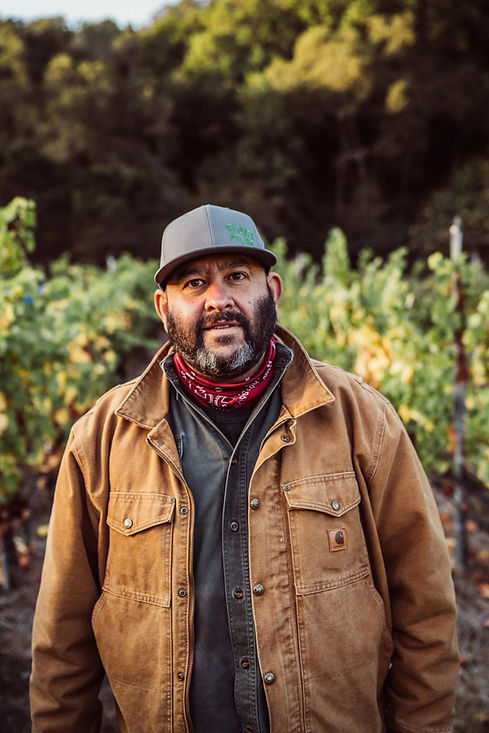
Rajat Parr
Sommelier, Award-winning Author, Winemaker, Farmer at Phelan Farm
Rajat Parr has lived his life intertwined with the vine. The knowledge and inspiration gleaned from his legendary career as a top sommelier, award-winning author and celebrated winemaker has led him to the challenge of a lifetime as a wine farmer on the California Coast.
Widely recognized as one of the country’s greatest sommeliers, he built his reputation as a wine director with an extraordinary palate, a rare gift for blind tasting, and an obsessive drive to explore new wines, winemakers, and regions. As Wine Director for chef Michael Mina’s restaurants for nearly two decades—and as co-founder of the acclaimed RN74 wine bar in San Francisco—Parr helped reshape the role of the sommelier as a public figure and educator, introducing broader audiences to the ever-evolving world of wine. A three-time James Beard Award winner and a featured voice in the SOMM documentary series, he is also the co-author of two essential books—Secrets of the Sommeliers and The Sommelier’s Atlas of Taste—now regarded as touchstones for wine professionals and passionate amateurs alike.
In the second act of his career, Parr turned his attention from the cellar to the vineyard, becoming a driving force behind a new generation of California wine. As a founding partner and winemaker at Evening Land Vineyards, Sandhi, and Domaine de la Côte, he helped define a more restrained, terroir-driven approach to Pinot Noir and Chardonnay—first on the California coast, and later in Oregon. Today, farming is his deepest obsession. With every vintage, he continues his life’s work: pursuing purity, expressing place, respecting soil, and proving that regenerative farming can benefit both the land and the wines it yields.
Now, Phelan Farm is his home base in Cambria. Rajat leads an expert team cultivating grape varieties (Chardonnay, Pinot Noir, Trousseau, Gamay, Poulsard, Mondeuse, Savagnin etc.) suited to thrive in the cool- climate San Luis Obispo Coast AVA. His approach to farming draws from the regenerative principles but maintains flexibility, improving the soil to build resilience in the vines from the roots up. Every step is taken with the understanding that great wines are born in the vineyard. When the grapes have taken up everything they need from the land, the sun, the fog and the wind, their transformation into wine is undertaken with as little intervention as possible. A philosophy of “add nothing and take nothing away” guides the process from harvest to bottle. All the wines are aged in older oak barrels of all sizes and hand bottled without any fining or filtration.


Abby Rose
Founder, Vidacycle and Co-Founder, Farmerama Radio
Abby Rose is a soil health advocate and part-time farmer. She is co-founder of Vidacycle, who created and run Sectormentor: a platform that supports vineyards with practical tools to manage the vines and build soil health, including the Regen Platform developed in partnership with agroecologist Nicole Masters. Abby is also co-creator of Farmerama Radio, an award-winning podcast sharing the voices behind regenerative farming.
Based in the UK, Abby splits her time between working on her family farm, Vidacycle, in Chile, and visiting farms on multiple continents learning from soils and understanding what it's going to take to build a more ecological farming future.
Abby was named one of the ‘50 Next’ young people shaping the future of gastronomy by The World’s 50 Best.
Abby's goal is to facilitate positive change across the food and farming system, combining technology with support for ecological and profitable farming practices.

David Rosoff
Freelance Journalist | Wine Director,
Betsy & Bar Betsy
In 1993, Los Angeles native David Rosoff left the music business to begin a career in restaurants. He has since served as manager and wine director at seminal institutions including Michael’s and Campanile, and as Managing Partner at Nancy Silverton’s Pizzeria Mozza, Osteria Mozza and Chi Spacca.
Rosoff has partnered in and helped to launch several influential concepts, including Bar Moruno, Triple Beam Pizza and Hippo.
His work has drawn widespread acclaim. Los Angeles Magazine noted that “David Rosoff has created the town’s most innovative wine list,” while the Los Angeles Times described “a list so savvy it can’t help but be the star.” The paper went on to call Rosoff “wine royalty in Los Angeles,” citing his tenure at i Cugini, Michael’s, Opaline, Campanile and, most notably, the Mozza restaurants, where his all-Italian lists helped reshape how Angelenos engage with wine. “If this city has a wine consciousness,” the Times wrote, “Rosoff is one of its principal catalysts… a vinous municipal treasure.”
He is currently Wine Director for Betsy and Bar Betsy in Altadena in addition to other consulting programs and writes about wine for publications including the Los Angeles Times, Punch and the San Francisco Chronicle.

Chiara Shannon
Co-Owner, Groundstar Vineyard
Chiara Shannon is an influential figure in the wine industry, known for her expertise in sustainability, mindfulness, and wine. With a Bachelor's degree from the University of California, Berkeley, an Executive MBA in Global Wine from Sonoma State University, and the Level 4 Diploma certification from the Wine & Spirits Education Trust (WSET) in London, Chiara has a wealth of experience in sales, marketing, retail management, education, and leadership.

Director of Land Stewardship,
White Buffalo Land Trust
Jesse Smith
Jesse is an agricultural producer and leader dedicated to fostering a resilient food community in California’s Central Coastal region. With over a decade of experience, Jesse merges his expertise in communication design with a passion for agricultural system planning, management, and evolutionary change.
In his role as Director of Land Stewardship, Jesse manages the Center of Regenerative Agriculture at Jalama Canyon Ranch, a 1,000-acre living laboratory that integrates farming, ranching, conservation, education, training, monitoring, research and enterprise. He actively works to restore ecological balance in food, fiber, and medicine production, emphasizing soil health, water cycles, and biodiversity.
In addition to his on-the-ground stewardship, Jesse engages with leading regional and global food and fashion brands through education, speaking events, and keynote presentations—helping translate regenerative agriculture from concept to practice. By grounding these conversations in real-world application, he supports companies in understanding how land stewardship can meaningfully inform sourcing, supply chains, and long-term impact.
As an individual with a multicultural and multidisciplinary background, Jesse's leadership and dedication to regenerative agriculture are driving transformative changes that connect the threads within social, ecological, and capital systems. He is focused on shifting the industry of agriculture from a paradigm of do-less-harm to one of living system regeneration, and the community that is growing around him is a manifestation of what the world needs most these days. In addition to his role as Director of Land Stewardship at WBLT, Jesse supports multiple local initiatives through volunteering on committees and boards with the Santa Barbara Botanic Garden, Santa Barbara Middle School, Green America: Carbon Farming Innovation Network, and Regenerate America.

Caine Thompson
General Manager, U.S. Operations,
Saga Robotics